Office Hours in the Age of AI: The Power of Human Connection

[Guest post by Christine Solan, Teaching and Training Specialist, Biology, Johns Hopkins University]
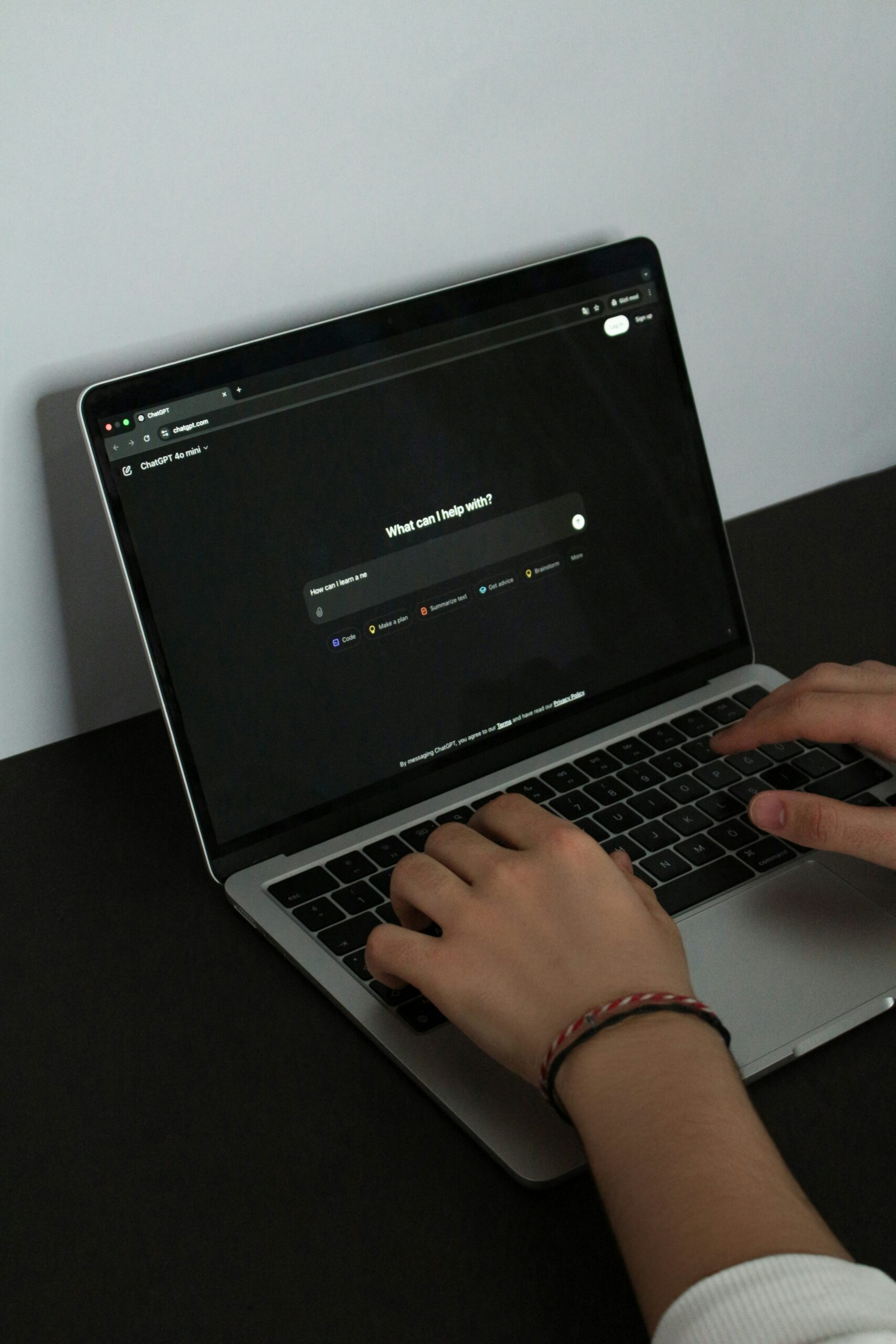
someone's hands at a laptop prompting ChatGPT
Over the past year, many instructors and teaching assistants (TAs) have been asking what office hours mean now that students can get instant answers from AI. The more this question is explored, the clearer it becomes: even with continuous advancements in AI, the human elements of teaching are more important than ever.

AI can generate responses, but humans build thinkers. Humans can help students feel seen, capable, and connected to a discipline. That distinction is especially visible – and fragile – during office hours.

The Problem Behind the Problem

Office hours have long been underused. Hsu et al. (2022) showed that students often view office hours as narrowly useful and face real psychological barriers such as fear of looking incompetent, uncertainty about expectations, and the belief that asking for help signals weakness. In newer work (Hsu et al., 2025), first‑year STEM students describe office hours as intimidating or unclear, even when they know the sessions could help.

At the same time, students increasingly turn to generative AI as their first stop for academic support. Chatzopoulos et al. (2026) found that AI tools have become part of students’ everyday learning practice for things like clarifying concepts, preparing for exams, and smoothing out the friction of studying.

Put these findings together and the situation becomes clear: students aren’t avoiding office hours because they don’t need help, but because AI feels easier, safer, and more predictable. If office hours remain an unstructured drop‑in Q&A desk, AI will win every time.

The Human Advantage: What AI Can’t Replace

Instructors and TAs still offer support that AI cannot fully replicate:

  • Personalized guidance
  • Mentorship
  • Connection

These aren’t “extras.” They are central to how students learn to reason, ask bettergroup of students looking at laptop questions, and develop a sense of belonging in a learning community. AI can support learning, but it cannot replace the experience of being known, coached, and intellectually challenged by another human being.

This is why the human element of office hours matters more now, not less.

Moving Beyond the Help‑Desk Model

One way to keep office hours relevant is to think of them as structured, student‑centered learning experiences rather than troubleshooting sessions. The Stanford Teaching Commons (2023) reminds us that effective office hours require intentional facilitation, including clear expectations, active engagement, and inclusive practices. When instructors and TAs adopt these strategies, office hours can become spaces where students practice thinking rather than simply receiving answers, fostering the kind of learning and human connection that AI cannot reproduce.

Here are three shifts worth exploring:

  1. Reframe and Rebrand Office Hours

Students often don’t know what office hours are for; renaming them can help communicate purpose and value.
Examples include:

  • “Weekly Recap”
  • “Course Check‑Ins”
  • “Guided Study Session”
  • “Supplemental Course Assistance”
  • “TA Feedback Session”
  • “Collaborative Study Session”

A clear title communicates purpose. A clear purpose demonstrates value.

  1. Make the Value Explicit

Students need to hear – directly – why office hours matter.
Short, memorable value statements may help:

  • “AI generates responses. Office hours develop thinkers.”
  • “Students who connect, succeed.”
  • “When AI isn’t enough, conversation makes the difference.”
  • “Learn the why, not just the what.”
  • “Get ahead with tailored guidance.”
  • “Build deeper understanding for exams.”

These statements help students understand that office hours aren’t redundant with AI – they’re qualitatively different.

  1. Design for Interaction

If office hours are passive, students may be more likely to default to using AI. Making them interactive gives students a reason to return.
Effective strategies include:

  • Using peer‑to‑peer problem solving
  • Incorporating mini‑activitiesgroup of students sitting outside
  • Meeting in new or more inviting spaces
  • Integrating technology intentionally (e.g., games, collaborative tools)
  • Facilitating collaborative learning

These small design choices transform office hours from transactional to relational.

Why This Matters for Faculty

Faculty set the tone for how students perceive office hours. When instructors model and endorse structured, interactive office hours, students may be more likely to see them as integral to the course rather than optional support. Faculty also play a crucial role in helping TAs shift from “answer‑givers” to learning facilitators. When TAs feel empowered to design meaningful office hour sessions, they build leadership, communication, and coaching skills that serve them far beyond their time in the classroom. Students, in turn, benefit from office hours as welcoming, purposeful spaces that offer something AI cannot provide on its own: deeper learning through human connection.

The Future of Office Hours Is Human

AI will continue to evolve, and students will continue to use it. That only increases the importance of the relational, interactive, and intellectually generative work that happens both inside and outside of the classroom.

If we want students to become scientists, researchers, critical thinkers, and thought leaders – not just answer‑seekers – we can design office hours that cultivate curiosity, belonging, and the kind of thinking AI cannot do for them.

Office hours aren’t obsolete. They are an opportunity. With thoughtful design, they can become some of the most meaningful learning experiences we offer.

Christine Solan
Teaching and Training Specialist, Biology
Johns Hopkins University

Christine Solan is a seasoned education professional with extensive experience in curriculum design, training, and development. She holds an M.S. from Johns Hopkins University and a B.A. in Biology Secondary Education. In her current role as a Teaching and Training Specialist (TTS) in the Department of Biology at Johns Hopkins University, Christine focuses on enhancing the undergraduate classroom experience in STEM courses where TAs play important teaching roles.

Image source: Unsplash

References:

Chatzopoulos, A., Zacharia, P., & Kantaros, A. (2026). Generative AI in higher education: A large-scale study of student usage patterns, applications and motivations. Applied Sciences, 16(12), 5972.

Hsu, J. L., Holick, G., Green, R. M., Schwartz, E. B., & Rowland-Goldsmith, M. (2025). “Asking for help feels like a weakness”: Factors shaping first-year students’ expectations of STEM course office hours. International Journal of STEM Education, 12, 40. https://doi.org/10.1186/s40594-025-00561-3

Hsu, J. L., Rowland-Goldsmith, M., & Schwartz, E. B. (2022). Student motivations and barriers toward online and in-person office hours in STEM courses. CBE—Life Sciences Education, 21(4), Article ar68. https://doi.org/10.1187/cbe.22-03-0048

Kogler, A. & Cao, Y. T. (2023). Strategies for Office Hours and Review Sessions for TAs. Stanford University, Teaching Commons. https://teachingcommons.stanford.edu/news/strategies-office-hours-and-review-sessions-tas  ​

 

Office Hours: Insights from Instructors

This past spring, the CTEI Journal Club read and discussed an article from the October 2024 edition of Cell Biology Education – Life Science Education journal titled: Exploring Variations in STEM Instructors’ Approaches to Office Hours. This article presents findings from a study that examined how STEM instructors from one institution perceive and conduct office hours. This study is somewhat unique in that most of the existing literature around this topic focuses on the student experience during office hours and how it impacts academic performance rather than how instructors structure and manage office hours.  

In the study, the authors conducted interviews with 18 STEM instructors who had class sizes ranging from 10-80 students. They were asked to describe a typical office hour (where they were held, who attended, the type of instruction they gave) and also a successful and unsuccessful office hour.  They were also asked if their approach to office hours has changed over time and whether or not they ever discussed office hour strategies with other instructors (Forsythe et al., 2024). Reponses were summarized into three categories:  

  • Promotion of office hours 
  • Modality of office hours 
  • Management of office hours 

Within each category, the responses varied from student-centric (students’ interest in mind) to instructor-centric (instructor’s self interest in mind). 

To promote office hours, instructors shared several examples of student-centric strategies: sending personalized outreach, encouraging peer collaboration, providing frequent reminders, and offering incentives like snacks or games. Some instructors were unsure of the value of office hours or felt that office hours are busy enough already and took a more instructor-centric approach by not promoting them at all.   

For modality, some instructors said they prefer drop-in office hours while others prefer them to be scheduled. Senior instructors often preferred scheduled office hours to avoid conflicts with other responsibilities, such as research (Forsythe et al., 2024). There were also differences in holding office hours online vs. in person; some instructors believe that meeting in-person allowed them to get to know students better. Others preferred Zoom, stating that it’s not only more convenient for themselves, but also for students.   

As for managing office hours, instructors teaching more than one class per semester discussed holding separate office hours for each class or combining them for students in any of their classes. Those who chose to combine them believe that it offers students greater flexibility in attending and, if the course content allows, promotes student interaction (Forsythe et al., 2024). Another issue was how to manage high attendance and how difficult it can be to answer all student questions. Several instructors make an effort to answer questions in order and also recruit other students in the session to help out. Some instructors communicate their strategies to students ahead of time to manage student expectations during the session.  

When asked about barriers and challenges associated with holding office hours, several instructors in the study voiced frustration over the lack of training and wondered about the availability of guidelines or best practices. Many admitted feeling uncomfortable during the sessions and were unsure if they were taking the most effective approach with students. A number of instructors also noted that this topic is rarely discussed and expressed interest in opportunities to share experiences and strategies with their colleagues. 

During the journal club meeting, JHU instructors sympathized with the faculty in the article and shared their own experiences with office hours. One topic that came up was how to involve teaching assistants (TAs) in office hours.  An instructor shared that she holds joint office hours with TAs and they work alongside each other with students in small groups. Another instructor explained that she flipped part of her lecture and incorporated a weekly group office hour—held with both herself and the teaching assistants—into the regular class meeting time to make it easier for students to attend. 

The group also addressed concerns related to attendance. One instructor noted that many students are unaware of the value of office hours—as an opportunity to seek extra help, ask questions, and advocate for themselves—and, as a result, often choose not to attend. Another commented that students who historically have done really well academically are conditioned not to ask for help. Other instructors offered the following suggestions to help boost attendance: 

  • Make sure students know what office hours are; they may have been called something else in grade school, such as “coach class” or “drop-in hours.” 
  • Provide consistent reminders throughout the semester.  
  • Hold office hours in public places to put people at ease. 
  • Set up a meeting with students (as a group or individually) early in the semester and describe how office hours will work. 
  • Schedule office hours close to assignment deadlines as a motivator for students to attend. 

Do you have any experiences, tips, or advice to share with colleagues about holding office hours? Please share in the comments section below. 

Amy Brusini, Senior Instructional Designer
Center for Teaching Excellence and Innovation
 

Image source: Pexels

References:

Forsythe, D., Green, R.M., & Hsu, J.L. (2024). Exploring variations in STEM instructors’ approaches to office hours. CBE – Life Sciences Education, 23(4). https://www.lifescied.org/doi/10.1187/cbe.24-03-0109

Quick Tips: Take Your Office Hours for a Walk

Spring is here and the end of the semester looms. Your students should be showing up Overhead view of five people walking along a path, casting long shadows.for office hours to discuss their progress. Are they? We’ve shared some tips on office hours in the past (Faculty Office Hours: The Instructor is In, June 6, 2017), but here is an interesting idea. When the weather is conducive, maybe you could consider taking a walk with your students during office hours.

The Tomorrow’s Professor newsletter shared this post Thinking outside the Office (Hours) by Fiona Rawle-Close, excerpted from National Teaching and Learning Forum, Volume 26, Number 4, May 2017. Rawle-Close says:

I was trying to think of ways in which I could make my office hours more effective in terms of connecting with students and having meaningful discussions. I noticed that some students often seemed intimidated in my office, and sometimes avoided making eye contact. I decided to hold walking office hours, where we walk on trails around campus. Being a parent, I noticed that my kids are sometimes more willing to talk about difficult subjects when they are in the car and aren’t making direct eye contact. I thought perhaps the same would be true of my students, as it is difficult to make direct eye contact when walking on trails. It became clear to me that walking office hours, although I’m not advising that they should act as a replacement for traditional office hours, are an excellent supplement.

She goes on to detail her methods and strategies. It should be noted that the walking office hours were in addition to traditional office meetings. She discovered that students came to the two sessions for different reasons.  “The walking office hour students asked questions about my research, my experience as a student, sought out advice for personal matters, or just wanted to chat about current events. During my walking office hours, students would rarely ask questions about test or exam marks or even about course content.” Obviously it is difficult to go over papers or problem sets in detail when you are out walking, so you may want to set expectations for the walking versus traditional settings.

Rowle-Close reminds us to keep the needs of mobility-challenged students in mind and makes some suggestions for accommodations. All in all, she felt that the additional time and scheduling was well worth the time given the success she had in connecting with students.

Macie Hall, Senior Instructional Designer
Center for Educational Resources

Image Source: Pixabay.com

Faculty Office Hours: The Instructor is In

Peanuts comic showing Lucy in the psychiatrist's booth, re-labelled to say "Course Help Free; The Instructor is In."What if you hold office hours and nobody comes? That’s the issue that Dr. Richard Freishtat, Director of the Center for Teaching and Learning at UC Berkeley addresses in Don’t Be Alone During Office Hours (Tomorrow’s Professor, January 10, 2017). He describes a student panel at Berkeley on facilitating student success. When the student panelists were asked by a faculty member about attending office hours, there was silence. Why was this opportunity not being pursued? One student responded, “Reason #1: ‘I think office hours is for students who are struggling with the material and need extra help. I wouldn’t want my professor to know I’m struggling, even if I was.’ Reason #2: ‘I was fascinated by the Professor, the discipline, and research in the field beyond what we were focusing on in class. I would have loved to drop into office hours and just talk with my professor about her own research, but figured there’s no way she’d want to take the time to do that with me.’” Faculty in the audience expressed just how much they would appreciate students coming to see them for the latter reason.

Freishtat goes on to suggest some ways to increase student attendance at office hours including making it an assignment, telling students how to use/what the purpose is of office hours, explaining to students how to start an office hours conversations (bring a question, a quote of interest, a story), scheduling varying days and times to accommodate different schedules, and promoting office hours throughout the semester/quarter.

For more on practical measures to take to improve the participation and outcome of your office hours, see the Stanford Teaching Commons website on Office Hours That Work and the University of Washington Center for Teaching and Learning on Face to Face Office Hours.

Macie Hall, Senior Instructional Designer
Center for Educational Resources

Image Source: CC Image from Flickr [https://www.flickr.com/photos/frederickhomesforsale/16107671226] modified by Macie Hall