[Guest post by Leslie Bauman, Junior Lecturer in the Department of Psychological and Brain Sciences, Johns Hopkins University]
Introduction
The academic public health community has long recognized the value in experiential learning when it comes to public health practice. Like programs at many other  universities, PHS majors at JHU must complete at least 80 hours of field work in a professional public health setting and engage in reflection on how those experiences bring their coursework to life. At the same time, a gap exists in that public health curricula generally do not reflect the importance of experiential learning when it comes to the very concept of health and well-being itself. Enter the Well-Being Lab.
In 2023, we launched an ambitious 2-year pilot of an experiential Well-Being Lab designed to address this curriculum gap. The idea was simple but powerful—what if students not only learned about population health and well-being but experienced it firsthand?
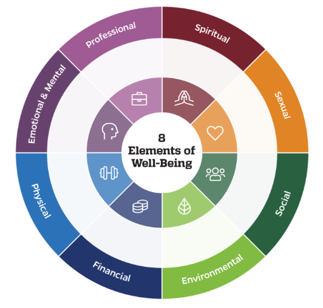
Our goals for the pilot were to test feasibility, gather student input, and explore models for integrating the Lab into the curriculum. During the pilot, students selected from a “menu” of activities and workshops that were available on campus through the PHS program or one of our campus partners (Health Promotion and Well-Being, Life Design Lab, Counseling Center, etc.), participate in the activity, and then reflect on how those experiences connected to their personal health and to broader public health concepts. The activities are categorized into eight aspects of health and well-being established by JHU’s Health Promotion and Well-Being office:
- Emotional/mental health
- Physical health
- Spiritual health
- Social health
- Sexual health
- Environmental health
- Financial health
- Professional health
Students were required to complete at least two well-being labs, each addressing a different dimension of well-being.
Results of the Pilot
The results were encouraging. Students engaged deeply with well-being concepts and were able to clearly articulate how their activities connected to population health themes. Many participants reported meaningful gains in stress management skills and increased awareness of campus well-being resources.
 Reflection activities—while in need of refinement—proved valuable. Students described them as a bridge between personal growth and public health theory, helping them see how well-being practices relate to professional practice.
Student Feedback
If there was one message that came through loud and clear, it was this: students want the Well-Being Lab to be a real course.
Across the board, participants endorsed:
- Making the Lab required
- Offering 1.0 academic credit
- Structuring it as pass/fail
- Keeping it in-person and experiential, not fully asynchronous
Students emphasized that without credit, the Lab would feel undervalued and less likely to be taken seriously. They also expressed a strong preference for interactive elements—guest speakers, group activities, and opportunities to build social connection. While students supported flexibility through hybrid formats, they were far less enthusiastic about fully asynchronous options.
Importantly, this preference was not just about format—it was about connection. Across the pilot and follow-up focus groups, students consistently shared that they do not want  another set of online modules, resource lists, or one-off workshops. They want small, peer-supported spaces where they can talk, connect, and grow.
Students were particularly drawn to peer-driven models, such as small groups led by trained peer mentors (e.g., upperclassmen or graduate students). They felt peer leadership would reduce formality, increase relatability, and create the psychological safety needed for honest conversation, accountability, and skill-building. These spaces, students emphasized, should feel social—but still structured enough to foster inclusion and follow-through.
Results from the activities and reflections in the pilot further reinforced this theme: students most valued well-being experiences that felt practical, low-barrier, and embedded into everyday life.
Students also asked for:
- Shorter, completion-based reflections
- Options for anonymity in sensitive topics
- “Looser,” everyday activities like walks, gratitude practices, or financial planning
- Practical life-skills content—time management, cooking, budgeting, navigating campus resources
In other words, students want well-being education that feels relevant, doable, and grounded in real life.
Lessons Learned:
- Provide more structure and built-in educational content
- Build in small-group, peer-to-peer connection through structured check-ins and trained peer mentors to increase belonging, accountability, and engagement.
- Expand the menu of qualifying activities
- Add asynchronous modules (in moderation)
- Integrate the Lab into the PHS curriculum as a required component
- Start Lab participation earlier in the semester
- Build in biweekly check-ins instead of only start and end reflections
- Strengthen partnerships with campus offices
These changes would make the Lab more coherent, more flexible, and more aligned with students’ needs.
If you are considering launching a well-being or experiential learning initiative, here are a few takeaways from our pilot:
- Build in flexibility, especially in recruitment and participation.
- Credit matters—students engage more deeply when the work “counts.”
- Balance rigor with feasibility: shorter reflections and a manageable credit load help.
- Partner with existing campus resources to improve feasibility and avoid duplication.
- Connect reflection activities to disciplinary content to enhance both learning and well-being.
Final Thoughts
The pilot confirmed what many educators already suspect: students are eager for learning experiences that integrate personal well-being with academic and professional growth. The Well-Being Lab not only helped students understand public health principles more deeply—it supported them in living those principles. With thoughtful refinement and continued collaboration, this Lab has real potential to become a signature element of the Public Health Studies experience.
Leslie Bauman
Junior Lecturer, Psychological and Brain Sciences
Johns Hopkins University
Leslie Bauman is a junior lecturer in the Department of Psychological and Brain Sciences. Her research interests include clinical psychology, research methods, resilience, well-being, and mental health in university settings.
Image source: BalanceFormCreative – stock.adobe.com, JHU Vice Provost website, peopleimages.com – stock.adobe.com